
White People Are Learning What Intersectionality Feels Like. Now What‽
White Americans are encountering mechanisms that have always existed. This is not new injustice. It is the end of exemption. Now comes the choice.
This February, I am dedicating the month to reading, learning from, and sitting with Black feminist thinkers. This is not about perfection, performance, or having the right language. It is about honest introspection, especially for those of us who are white, with a willingness to examine how whiteness has shaped what we see and what we have been spared. You do not need credentials or answers to be here. If you are willing to reflect, to listen, and to engage with humility and care, there is space for you in this work.
I’m starting with intersectionality on February 1st because that’s where my own deconstruction began.
Not with Kimberlé Crenshaw. With Audre Lorde.
In 2006, I took over a global team; 36 locations, 22 countries, a massive restructuring. During a team building exercise, I met Gigi. She was 22, one of the youngest on the team, balancing full-time work and grad school. We discovered we were birthday twins. We bonded.
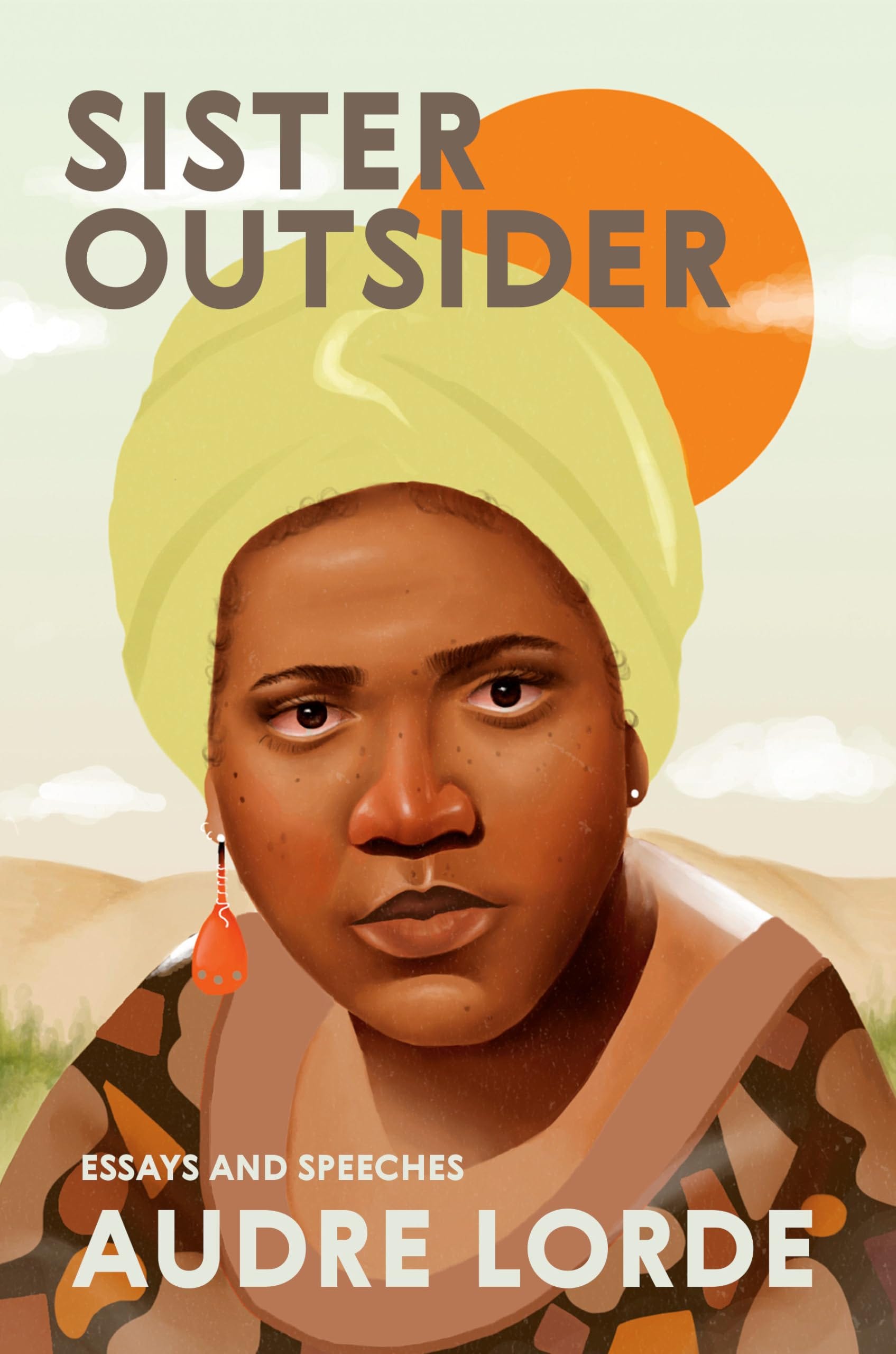
For the next four years, we exchanged small gifts every birthday. Year one, she gave me Sister Outsider.
That book shook me.
I have reread it at least once a year since. I turn to it for comfort. As an old white lady, this may not make sense, but the intersections of motherhood, gender, rage, and difference sit with me daily, even though much of my path is easier now than it was then.
Lorde taught me that systems do not fail equally. That harm compounds at intersections. That anger is information, not pathology.
That lesson is why I understand what is happening now. White people are finally FEELING what it means when the system stops recognizing you.
Trust Is a System. We Are Watching It Be Stripped for Parts.
Trust is not a feeling. It is an operational condition.
It is the measurable gap between what an institution claims it will do and what people reasonably expect will happen to them when they comply. When trust exists, people cooperate at lower cost. When it erodes, everything becomes expensive. Compliance, speech, labor, even silence.
What we are experiencing now is not a sudden loss of faith. It is a managed extraction of trust from the public, concentrated along familiar lines, and increasingly visible to people who once believed themselves insulated from it.
That is the context for what Cornel West said this weekend. His phrasing shocked some listeners. It was not designed to soothe. It was designed to name a condition that has long existed, and is now spreading outward. The point was not equivalence. It was exposure.
White Americans are discovering what intersectionality feels like. Not as theory. As lived fact.
Trust Erosion is not Random. It Follows Design.
Institutions do not lose trust by accident. They lose it when incentives reward opacity, impunity, and narrative control over accountability.
Trust can be measured. Not perfectly, but clearly enough to observe patterns.
You can track:
The delta between stated rights and enforced outcomes.
The frequency with which rule breakers at the top face consequences.
The number of intermediaries required to access basic protections.
The cost, financial and psychological, of contesting state error.
When these indicators degrade together, trust collapses into something else. Compliance under threat. Silence under surveillance. Participation under duress.
This is not new. What is new is who is being surprised by it.
For the first time in American history (and no, the 60s don’t count because everyone just quit after after the vote was “guaranteed”), large numbers of white people are encountering mechanisms that were never designed to protect them, because those mechanisms were never designed to protect anyone. They were designed to sort. To manage. To extract compliance from populations the state deemed threatening.
Black, Brown, and Indigenous communities have been describing these mechanisms for generations. They were told they were exaggerating. Being divisive. Playing the race card. Now white parents are being surveilled for objecting at school boards. White protesters are being held without bail. White workers are being fired for speech with no recourse. A whit woman, shot dead, and white man, murdered in the street for the audacity of using his whiteness to try to protect a woman of color. And suddenly, the mechanisms are real.
The shock is not that the system is broken. The shock is that white people thought it worked.
Intersectionality Explained this Before it Became Undeniable
Kimberlé Crenshaw gave us the diagnostic in 1989. Intersectionality was never about identity performance. It was about institutional blind spots. Systems built around a single “normal” subject will always misclassify harm that does not match the template.
In the United States, that template has been white, male, property-owning, and presumed innocent.
For everyone else, trust has always been conditional.
The law works until it does not. The police protect until they misidentify. The courts are neutral until discretion appears. Paper rights dissolve when enforcement is selective.
Crenshaw’s warning was precise. When institutions only recognize harm that fits clean categories, they do not fail equally. They fail predictably. And when harm falls between categories, when you are Black and a woman, poor and disabled, undocumented and queer, the system cannot see you at all.
White people are now falling between categories. Not because their identities are newly complex, but because the presumption that the system was built for them is collapsing.
A white January 6 defendant expects patriotic intent to matter. The judge sees only the charge. No category for “thought I was defending democracy.” The gap opens.
A white teacher fired for a Facebook post expects the First Amendment to apply. The school board cites at-will employment. No category for “I thought I had rights.” The gap opens.
A trans TA at UofO, gets fired for giving a bad grade for a shitty essay, based on biblical references. The gap opens.
A white woman arrested at a climate protest expects politeness to protect her. The officer cites municipal code. No category for “but I was peaceful.” The gap opens.
This is what intersectionality describes. The moment when the institutional template does not recognize you, and you discover that recognition was never guaranteed. It was granted. And it can be withdrawn.
White people are learning what it means when the grant expires.
bell hooks Named the Fusion. We Treated it Like Rhetoric.
bell hooks refused to let systems off the hook by discussing them separately. White supremacy, capitalism, and patriarchy were not adjacent forces. They were load-sharing structures. Each stabilized the others.
Trust erodes fastest where extraction is normalized.
Labor is extracted while wages stagnate.
Data is extracted while privacy is promised.
Obedience is extracted while rights are framed as optional.
Sacrifice is extracted while immunity travels upward.
When these extractions fall disproportionately on the same populations, we call it oppression. When they expand outward, we call it a crisis.
The mechanism does not change. The audience does.
White workers are now discovering what Black workers have known since Reconstruction: your labor is valued, but your dignity is negotiable. You can be fired for any reason or no reason. Your boss can monitor your email, track your location, record your calls. You agreed to it when you needed the job. The extraction was always there. You just believed you had leverage.
White communities are now discovering what Indigenous communities have known since contact: the state can take your land, your water, your children, and call it legal. Eminent domain. Zoning restrictions. Child services. The process is administrative. The harm is structural. You can contest it in court if you can afford years of litigation. Most people cannot.
White families are now discovering what immigrant families have known for generations: compliance does not guarantee protection. You can follow every rule, pay every fee, show up to every appointment, and still lose everything to a bureaucratic error you cannot fix. The system was never designed to be navigable. It was designed to exhaust you.
This is what hooks meant by fusion. The tools of extraction were always shared. White supremacy just determined who they would be used on first.
Audre Lorde Warned Us About the Price of Being Legible
In Sister Outsider, Audre Lorde was explicit about how institutions demand translation as the price of survival. Speak calmly. Be reasonable. Do not frighten the donors. Do not disrupt the meeting.
Tone becomes a gatekeeping technology.
Trust is withdrawn from those who express anger at being harmed. Their credibility drops. Their claims are reclassified as emotional, divisive, or irresponsible.
This is not cultural. It is administrative.
Institutions learn whose anger costs them nothing and whose anger threatens the structure. White supremacy functions here as a sorting mechanism. It decides which grievances must be addressed and which can be managed.
White people are now failing the tone test.
When white parents yell at school board meetings, they are removed. Their concerns are reclassified as threats. Federal agencies open files. The anger that was once read as passion—righteous, even—is now read as extremism, is now labeled “Domestic Terrorism.”
When white protesters block traffic, they are labeled “the Radical Left,” they are arrested. Their cause is reclassified as disruption. The civil disobedience that was once celebrated in history textbooks is now prosecuted as criminal conspiracy.
When white workers unionize, they are fired. Their solidarity is reclassified as disloyalty. The labor organizing that was once framed as American grit is now treated as insubordination.
The institutions did not change their standards. They changed who those standards apply to.
This is what Lorde meant. The demand for legibility—speak right, act right, prove you are reasonable—is not about communication. It is about control. When you fail the test, the institution does not hear you differently. It stops hearing you at all.
Black and Brown activists have been failing this test deliberately for decades, because they recognized that the test itself was the trap. Be legible enough to be heard, but not so legible that you are no longer threatening to power.
White people are now learning what happens when you cannot pass the test even if you try.
What West Named is the Widening of a Condition, not its Invention
When Cornel West said that white Americans are now experiencing what Black Americans have long endured, he was not arguing sameness. He was pointing to convergence, an intersection.
The state is becoming less constrained by legitimacy and more reliant on force, delay, and exhaustion.
We see it in:
Protest responses that treat assembly as threat.
Administrative punishment without due process.
Expanding surveillance paired with shrinking redress.
Courts that move slowly for the powerless and quickly for the connected.
What shocks some white Americans now is not the existence of these mechanisms. It is their proximity.
A white man is held in pretrial detention for months. No prior record. He expected bail. He believed that presumption of innocence meant something. He is learning that detention is not about guilt. It is about leverage. About making you take a plea because you cannot afford to wait for trial. He is learning what Black men have been saying for generations: the process is the punishment.
A white woman’s cash is seized during a traffic stop. Civil asset forfeiture. No charges filed. She is told she can contest it in court. The court is three counties away. The filing fee is more than the cash seized. She is learning what Latinx drivers have been saying for decades: the law protects property, but only if you can afford to claim it.
A white family loses their home to foreclosure. The paperwork was filed incorrectly. The bank cannot produce the note. It does not matter. The eviction stands. They are learning what Black families learned during the housing crisis: the courts protect banks, not borrowers. Your legal claim is irrelevant if enforcement is discretionary.
These are not new injustices. They are old tools being applied to new populations.
The radius is expanding.
Trust Collapses When People Realize the Rules Were Never Mutual
For generations, white Americans operated inside a presumption. Not that harm could not happen to them—people lose jobs, face illness, endure financial catastrophe—but that the state would treat those harms as problems to be solved rather than conditions to be managed.
That presumption is breaking.
White people are discovering that constitutional rights are not self-executing. That courts are slow and expensive. That police discretion is not distributed fairly. That administrative categories bypass legal protections entirely.
They are discovering what communities of color have been saying all along: the rules were never mutual.
When a Black driver is pulled over and searched, white observers assume there was cause. When a white driver is pulled over and searched, they call it overreach. The mechanism is identical. The interpretation depends on who is subjected to it.
When a Muslim community is surveilled without warrants, white neighbors assume there is intelligence the public does not see. When a white protest group is infiltrated by federal agents, they call it tyranny. The mechanism is identical. The outrage depends on who is targeted.
When an immigrant family is detained indefinitely, white citizens assume they must have violated a law. When white January 6 defendants are held without bail, they call it political persecution. The mechanism is identical. The alarm depends on who is locked up.
This is the convergence West named. Not that the experiences are equivalent. Not that the historical weight is the same. But that the mechanisms are now being applied to people who believed they were exempt.
And in that discovery, white people have a choice.
Where We are Now
We are in a phase where institutions still demand trust rhetorically while structurally dismantling the conditions that make trust rational.
This is the dangerous middle.
People are told to comply while evidence accumulates that compliance does not protect them. They are told to vote, work, report, and wait, while watching those who violate norms ascend.
Historically, this is when societies decide whether to repair or to harden.
Repair requires constraint. Constraint requires admitting harm. Admitting harm requires listening to those who have been describing it for generations.
White people now have proximity to mechanisms that Black, Brown, and Indigenous communities have been describing for decades. That proximity could lead to solidarity; recognizing that these tools should not exist, and using white access to power to dismantle them for everyone.
Or it could lead to resentment; demanding to be re-exempted, aligning with authoritarian promises of protection for the right people, treating communities of color as competitors for state favor rather than allies who have been navigating this terrain all along.
The first path requires humility. It requires white people to stop centering their own shock and start leveraging their access. To stop asking “how did this happen to us?” and start asking “how do we make sure this does not happen to anyone?”
The second path leads to fascism. Not as metaphor. As structure. Fascism offers a deal: accept hierarchy, and you will be placed above someone. The deal is always a lie. The state expands its coercive power, and eventually, the hierarchy that was supposed to protect you becomes the hierarchy that consumes you.
We are at the fucking intersection.
What Must Change Immediately
One constraint would shift the system.
Every state action that increases coercive power must include a public trust impact statement.
Not a press release. A ledger.
What rights are narrowed, and for whom.
Who bears the risk.
What remedies exist for error.
How harm will be measured and corrected.
And critically: what communities have already been subjected to this mechanism, and what did they experience.
This would force institutions to admit that tools are not neutral. That surveillance has always been deployed selectively. That administrative punishment has always fallen hardest on those with the least recourse.
It would make visible what has always been true: the state has more power than it admits, and less accountability than it claims.
No trust accounting, no expansion of authority.
This would not solve everything. It would make erosion visible. Visibility is the enemy of impunity.
And it would give white people a framework for understanding that what they are experiencing now is not new. It is the removal of exemption. The tools were always there. They were just aimed elsewhere.
The Throughline
Crenshaw showed us how harm is hidden when it does not match templates.
hooks showed us how systems fuse to extract from the many and protect the few.
Lorde showed us how institutions punish difference and demand legibility.
West is naming what happens when the radius expands.
White supremacy is not only a hierarchy of people. It is a design philosophy that treats trust as something to extract rather than earn. It builds institutions that function through discretion rather than constraint. It creates categories of people who must prove they deserve protection and categories who are presumed to deserve it.
When that philosophy turns inward, when the state decides that white people are also a population to be managed rather than citizens to be served, the shock is not that the system is cruel. It is that some people believed it was neutral.
White people are learning what intersectionality feels like. They are learning that the gaps between law and enforcement, between rights and protection, between compliance and safety, were always there. They are learning that constitutional guarantees are not automatic. They are learning that the state can do to anyone what it has always done to the most vulnerable.
The question is what they do with that knowledge.
Do they demand to be re-exempted‽ Or do they recognize that the exemption was the problem, and join the work of building systems that protect everyone because no one is expendable‽‽
That choice will determine whether we repair or whether we harden.
Trust is not a feeling. It is a structure. And if white people can finally feel it breaking, they are also finally in a position to help repair it.
Subscriptions as Solidarity
A choose-your-own-investment model for readers who know that value, community, and political force are all built together.
For the record, this will always be free, but paid subscribers lend credibility and legitimacy to the community as a whole.
Love this piece. Crystalises so much for me. Thank you.